|
|
|
|
|
Imagine this scenario: a 40-year-old father of two tells his AI assistant to find the state park with the annual firefly festival and enter his family into the lottery to camp there, then directs the same assistant to get a contract with Mosquito Shield and Tick Shield. We are fast becoming a society raising a generation of children to think they must go to a special preserved location to watch fireflies blink in the summer sky, like viewing lions on safari, while at the same time poisoning the habitat we have in our own yards that once hosted their own light show.
|
I am rather risk averse. I have never tried skiing and have no desire to jump out of an airplane on my next birthday. I do recognize, however, that I can't entirely control for the risk that I may be bitten by a mosquito. Spraying my entire yard with insecticide will not eliminate that risk and actually represents less control over the problem than taking personal responsibility to protect my skin and clothing instead.
|
I am not ignoring the real harms of contracting diseases through mosquito and tick bites. I am saying that we, as a society, must foreground the harms to the habitat we share with other organisms as we consider our actions.
|
As Doug Tallamy says (who has had Lyme Disease five times), "We have to manage the risk. Your risk of getting Lyme Disease and dying is not nearly as high as the risk every time you get in your car, but you learn to manage the risk."
|
One thing you can do to reduce ticks is dig up your barberry, which is known to attract black-legged ticks. Then you can sign up for Invasive Replace-ive, a new state initiative that encourages homeowners to remove one callery pear, burning bush, tree-of-heaven, butterfly bush, Norway maple, or Japanese barberry and receive 5 free native replacement trees.
|
So, as we head into spring, first, do no harm. Then plant and plant and plant!
|
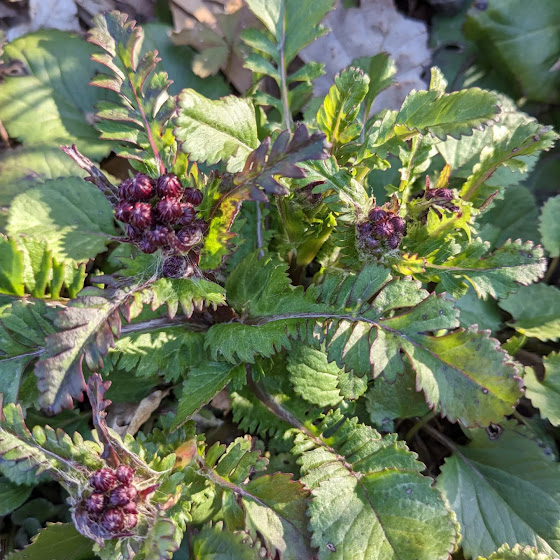
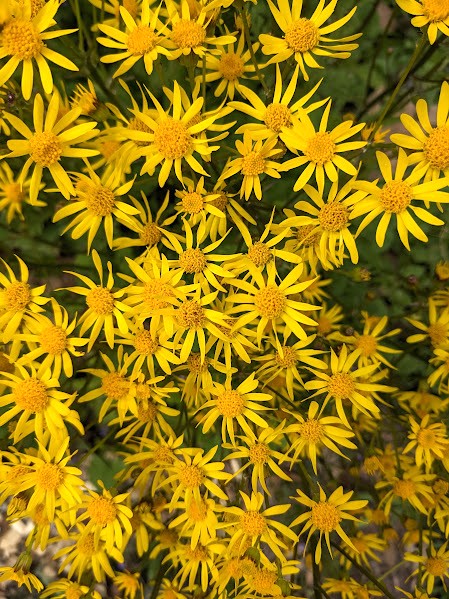
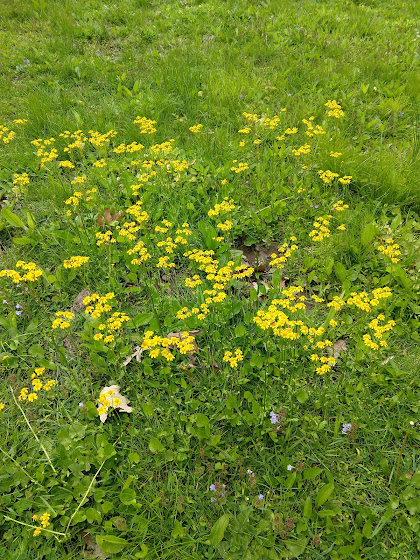
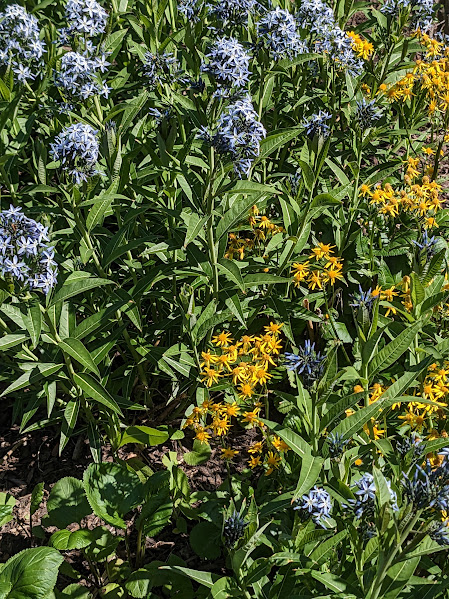
One of the first native perennial flowers to greet us in the spring, the buds of golden ragwort (Packera aurea) emerge as purple balls in a few weeks and erupt into sunshine by month's end. It offers nectar for 20 species of pollinators and its evergreen foliage hosts the caterpillars of 17 species of butterflies and moths. It is shown in the photo above with another early spring beauty, eastern bluestar (Amsonia tabernaemontana), and in the bottom right photo naturally occurring in the Gwynedd Friends Meeting burial ground.
|
Keep reading for more details about our festive and fact-filled spring gathering and ebullient spring calendar!
|
|
Glad to be thinking spring with you,
|
|
|
|
|
|
|
|
Join us at our spring gathering on March 22!
Welcome in the growing season with Journeywork at our second annual spring gathering at Plymouth Friends Meeting on Saturday, March 22 from 9:00-11:00!
|
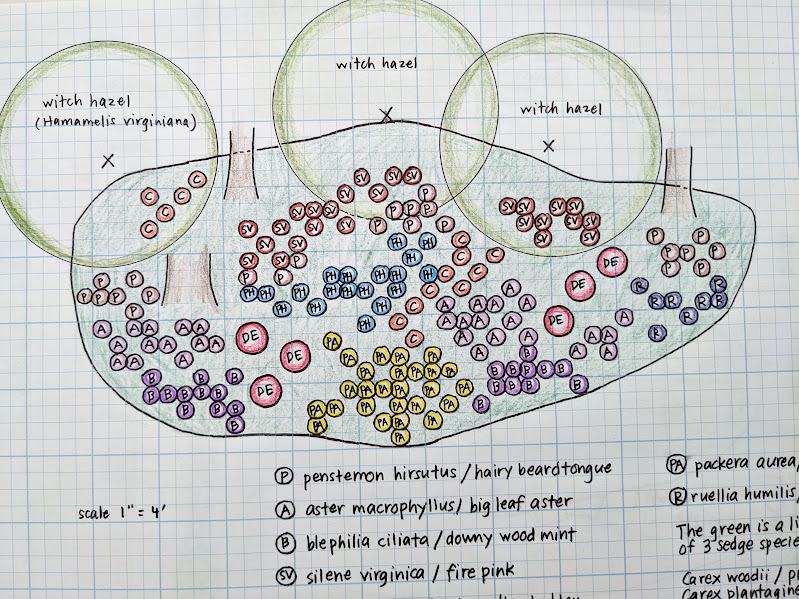
Enjoy bagels and fruit provided by Weavers Way and coffee donated by Backyard Beans, bring some seeds to swap, and hear from Sam Makler, Nursery Manager at Collins Nursery, about "Uncommon and Underused Natives." Then Kristy Morley, Wissahickon Trails Senior Naturalist, will share stories and photos of local wildlife she has observed. You can also check out the garden designs of the yards where we will be planting this spring.
|
|
Tickets are $15. Members save $5, as well as enjoy discounts at Good Host Plants and Edge of the Woods Nursery. If you haven't become a member yet, now is the season!
|
|
|
|
|
|
|
|
|
|
|
Rolling out the spring calendar
|
|
|
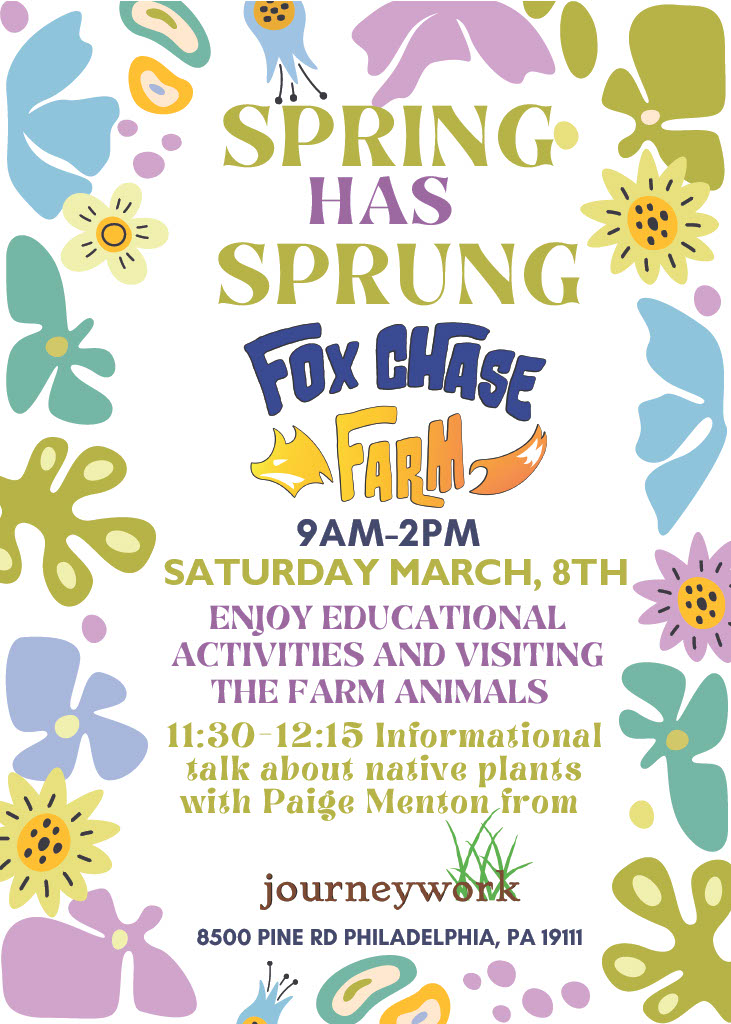
- Saturday, March 8: Fox Chase Farm Spring Has Sprung Day, 9:00-2:00
- Saturday, March 8: Upper Dublin EPAB Environmental Open House, Upper Dublin Public Library, 9:30-12
- Sunday, March 9: remove invasives in Whitpain, 2:30-4:30 register here
- Saturday, March 15: Weavers Way "Get Your Habitat Garden Started" workshop, Plymouth Friends Meeting, 1:00-2:30 register here
- Saturday, March 22: Spring community gathering at Plymouth Friends Meeting, 9:00-11:00 *discount for members buy a ticket here
|
|
|
- Tuesday, April 1: ordering for fall Pollinator Palooza begins
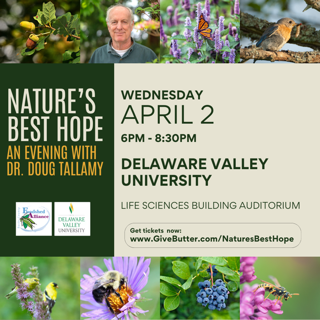
- Wednesday, April 2: Bucks County Foodshed Alliance hosts Doug Tallamy at Delaware Valley University, 6:00-8:30, purchase tickets here
- Saturday, April 5: live staking at Whitpain residence, 9:00-10:00 volunteer here
- Saturday, April 5: Abington Library Garden Fest, 1:00-3:00
- Saturday, April 12: planting shrubs in Whitpain, 9:30-11:30 volunteer here
- Saturday, April 26: tabling at Main Line Unitarian Earth Day Fair, 1:00-5:00 email me to volunteer
|
|
|
- Saturday, May 10: Screening of Citizen George with tabling at Ambler Theater, 11:00 email me to volunteer /buy ticket here
- Saturday, May 10: Towamencin EAC Environmental Fair during Towamencin Community Day, Fischer's Park, 12-4 email me to volunteer
- Friday, May 16 and Saturday, May 17: Pollinator Palooza plant pick-up
- Sunday, May 18: AWNF&GA plant sale at Twining Valley Park, Upper Dublin, 11:30-3:00
- Sunday, May 18: plant in Dresher, 1:30-4:00
|
|
|
- Tuesday, May 20: plant in Hatfield, 5:30-7
- Saturday, May 24: plant in Blue Bell, 9-11:30
|
- Wednesday, May 28: weed woodland garden at Gwynedd Friends School, 6:30-7:30
- Saturday, May 31: plant in Dresher, 9:00-11:30 and plant in Lansdale, 2:00-4:00
|
|
|
- Saturday, June 7: Bioblitz with Wissahickon Trails at Gwynedd Friends Meeting Burial Ground 9:00-12:00
- Sunday, June 8: Weavers Way garden workshop tour at Hope Lodge, 1:00-3:00 register here
- Monday, June 9: Journeywork plug sale at Gwynedd Friends Meeting, 6:00-7:30, **one free plant for members
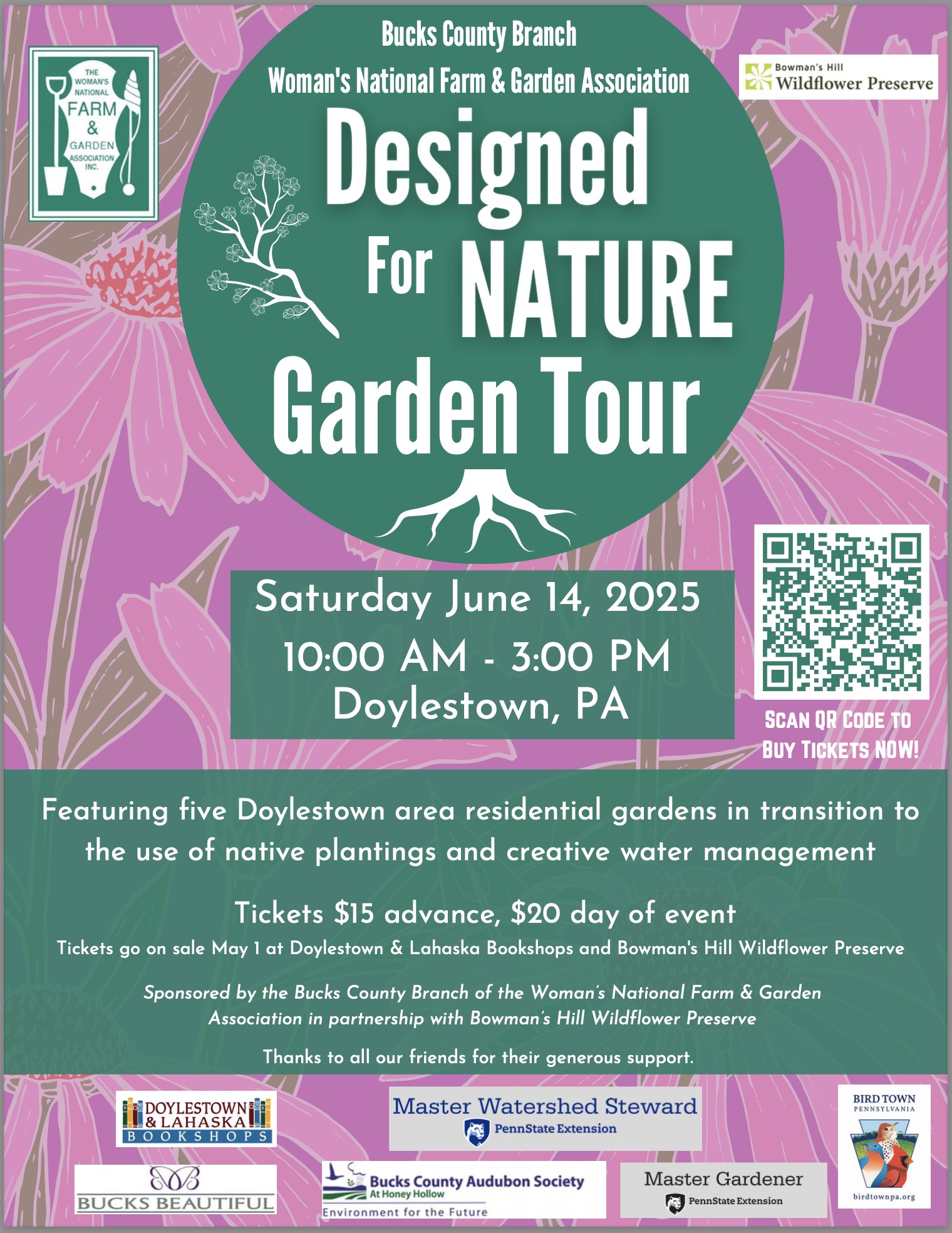
- Saturday, June 14: Bucks WNF&GA Designed for Nature Garden Tour buy ticket here
- Monday, June 16: meadow management at Plymouth Meeting Friends School, 7:00-8:00
- Friday, June 20: Summer Solstice lecture by Jenny Rose Carey, Gwynedd Friends Meeting, 7:00-8:30, *discount for members
|
|
|
|
Our merry English ivy pull
|
|
|
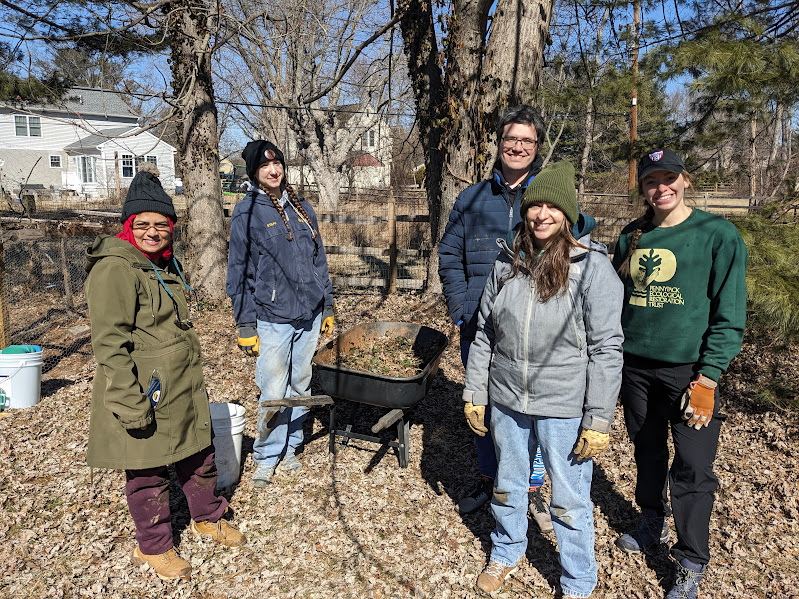
Journeywork volunteers worked carefully and thoroughly as the sun warmed the morning on February 22 to remove English ivy from some Eastern white pine and maple trees in a Blue Bell yard. Many thanks to our volunteers and to our host who made lunch for us afterwards!
|
|
If you would like Journeywork's help to clear an area of your yard to plant, please let us know!
|
|
|
|
|
|
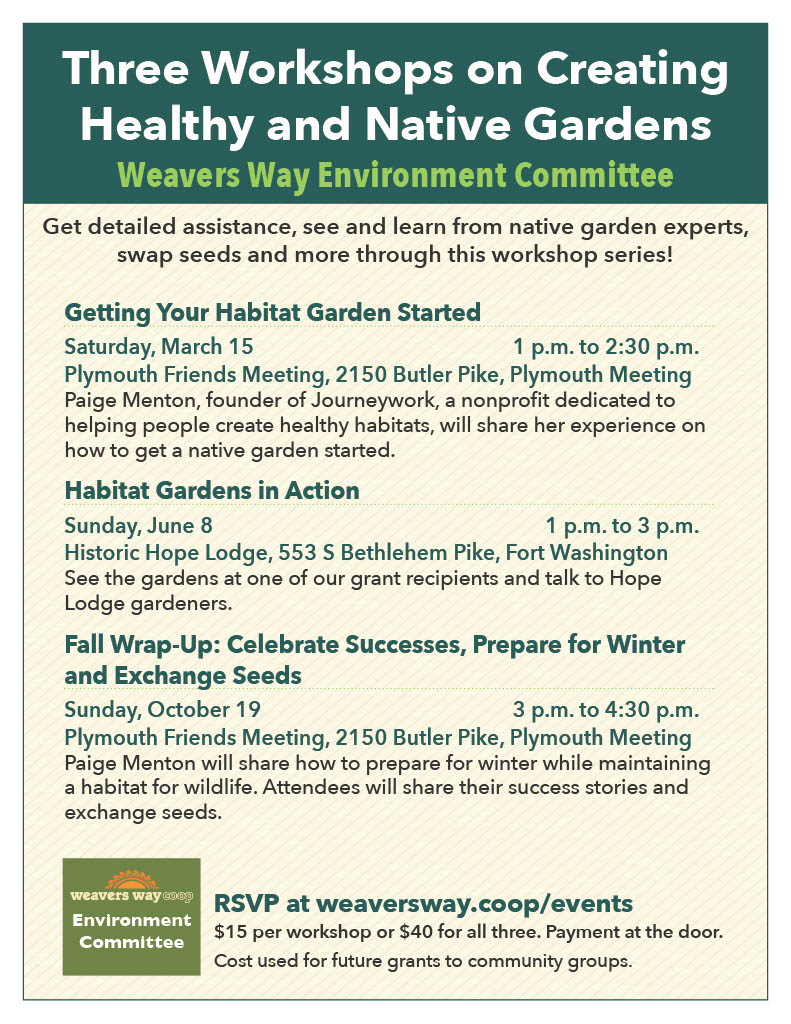
Garden workshop series with Weavers Way
|
Beware the ides of March, or join our gardening workshop to benefit the community grant program of the Weavers Way Environment Committee!
|
|
|
|
|
|
|
|
|
|
some notes I took
when I listened to a panel on February 11 that included Benjamin Vogt, Rebecca McMackin, Doug Tallamy, and Margaret Roach:
|
- When asked to name their signature plants, Rebecca said hers is columbine (aquilegia canadensis) because it represents "the deepest desire of the ruby-throated hummingbird." The columbine's red flowers evolved alongside hummingbirds and bloom for them because they can see red; bees can't. Ben Vogt said that white-tinged sedge (carex albicans) tops his list as the perfect soft landing under a tree. Soft landings keep mowers and feet from destroying insect larvae. "You can always stick some sedges into your garden."
- Doug Tallamy said that from the insect's point of view, there are some things we should not have done in plant breeding, namely creating double flowering nativars, which pollinators can't access, and turning a green leaf into purple because the anthoncyanins from the purple deter insects from eating.
- 85 species of birds in North America are cavity nesters and need snags.
- Rebecca McMackin's comment to put on a t-shirt, "Beauty is the sneaky way to change the world."
|
|
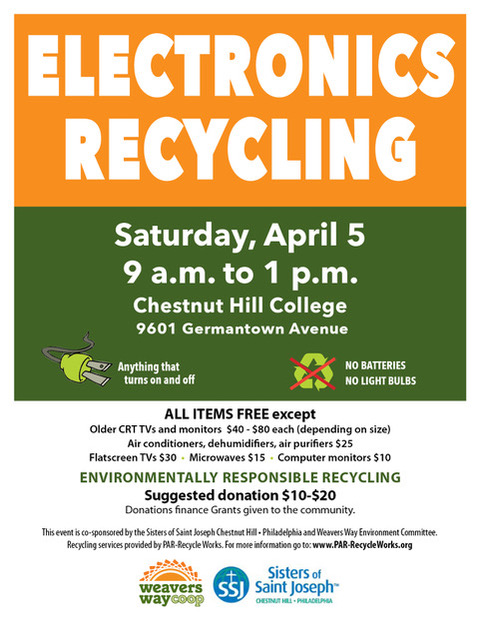
and one more thing for the good of the earth
|
|
|
|
If Journeywork inspires you to sheet mulch, start seeds, or plant some native plants in your yard, please send us a picture! Let's celebrate and support each other!
|
|
|
|
Follow us on social...
|
 
|
|
|
|
|