|
|
|
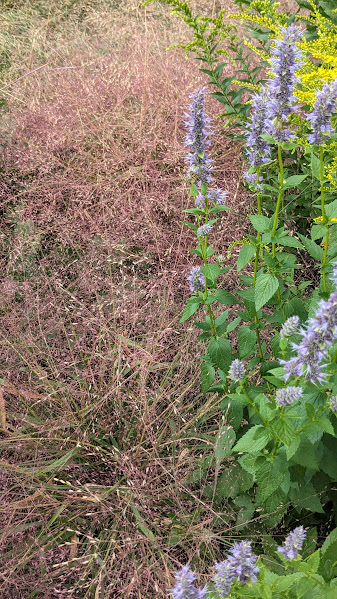
I fell in love with purple lovegrass (Eragrostis spectabilis) last year, after seeing it listed in the Wild Seed Project's guide entitled Native Ground Covers for Northeast Landscapes. We planted it in two Journeywork yards last spring (above), and it rewarded its guardians with pinkish-purple flowering clouds at the end of summer.
|
Heather McCargo has said that she founded the Wild Seed Project because she wanted everyday people to have access to seed knowledge so they could save their own seeds and grow their own native plants. We are inspired by a similar mission, to create a community of care, helping each other and learning from each other as we work together to restore ecological balance to the land.
|
We can only gain balance through diversity. With curiosity and empathy for the more-than-human world, we can invite diversity into our own yards, in flower pots outside our front doors, in planters on our balconies, reshaping the 135 million acres of residential landscape in this country, one yard at a time. Thank you for joining us in this healing work.
|
|
|
|
|
|
Get outside with us on 2/7!
|
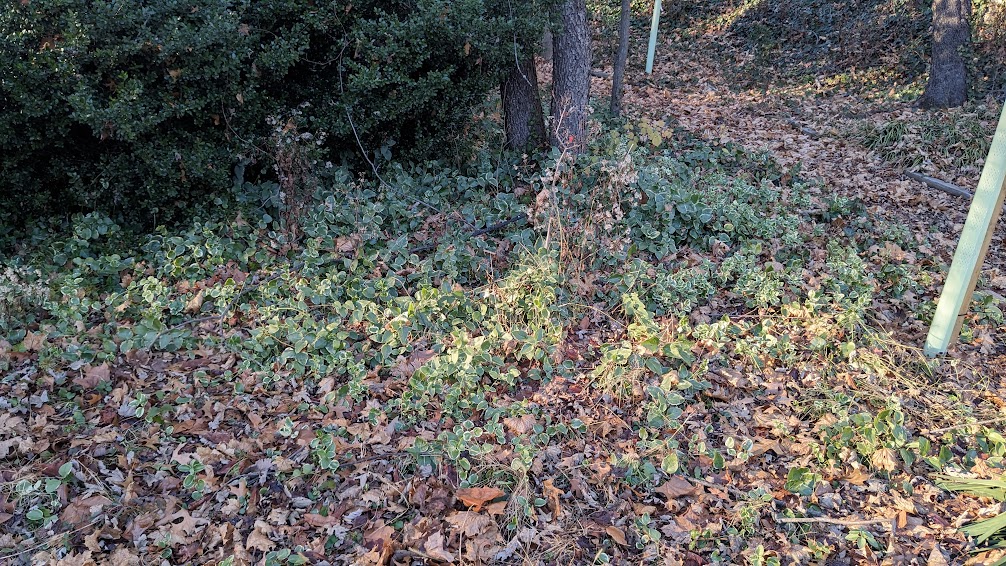
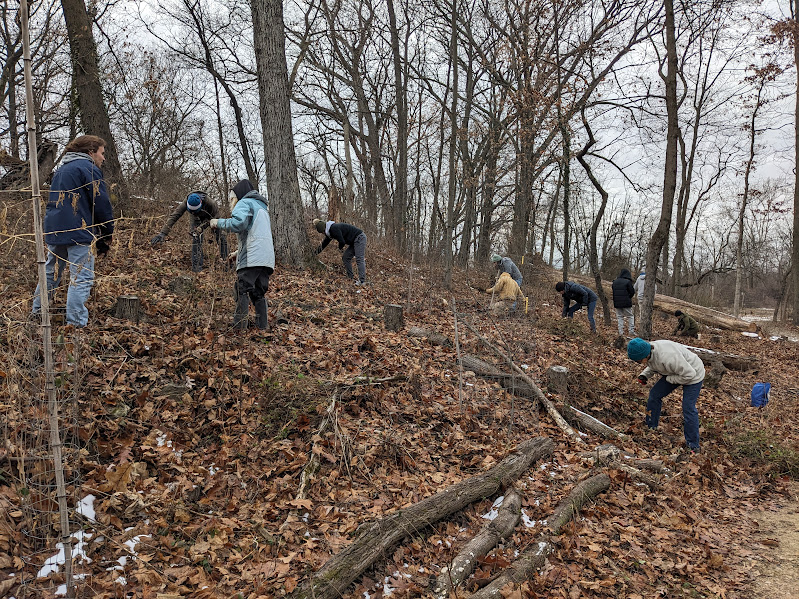
We are returning to the area in Harriet Wetherill Park where we worked last year to remove English ivy and honeysuckle vine. Andrew Conboy of Community Canopy Project reports that he has seen the bloodroot population in this old growth forest remnant expand with the removal of invasive species--very exciting! We will be working with volunteers from Community Canopy Project and Wissahickon Restoration Volunteers. Join us on Saturday, February 7, 9:30-12:00!
|
|
|
|
|
|
|
|
|
|
Residents say yes to pollinators
in Montgomery Township
|
|
|
|
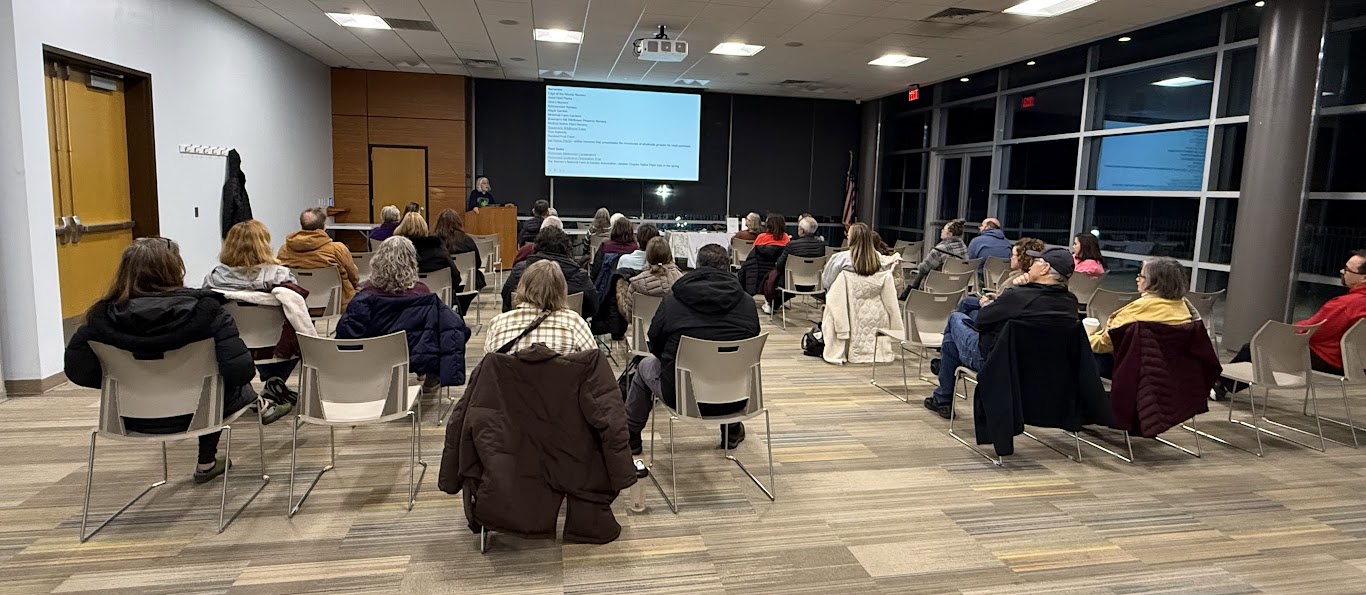
The Montgomery Township EAC reserved 50 Pollinator Palooza sets to distribute for free to residents. When the township announced this offer, all of the plant sets were claimed within 24 hours! I met with lucky residents on January 28 to share information about prepping their yards and building healthy habitat on their properties. Way to go, Montgomery Township!
|
|
|
|
|
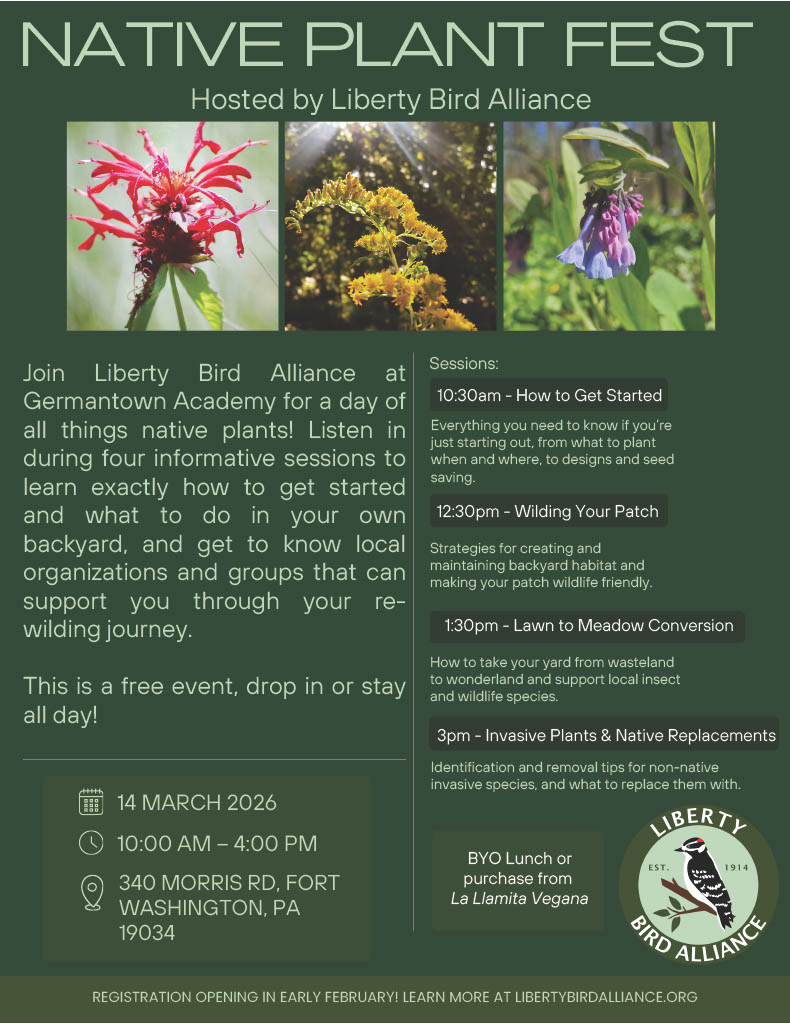
The first ever Native Plant Fest!
Saturday, March 14
brought to you by Liberty Bird Alliance
|
Journeywork will be there, along with many local organizations and township environmental advisory committees. Come get your questions answered and bring a friend! You can bring your own lunch or buy a delicious meal from La Llamita Vegana. (Excellent gluten-free Peruvian food--I have had it!)
|
|
|
|
and our 3rd annual spring gathering!
Saturday, March 21 from 9:30-11:30
|
|
|
|
|
Join us on the first Saturday of spring to learn how you can get involved with Journeywork! Enjoy a talk and Q&A by Samantha Nestory, the engagement manager and naturalist at Stoneleigh: a natural garden in Villanova. Samantha will be introducing us to the beneficial bugs that we can invite into our gardens to control pests (instead of using pesticides). Bring some seeds to swap if you have them, and trade planting tips, stories, and questions over coffee and bagels.
|
Tickets are $15 in advance, $10 for members (use the discount code on your membership card).
|
|
In her work at Stoneleigh, Samantha Nestory develops educational programming, coordinates public events, and manages the volunteer program. Previously, Samantha worked in ecological horticulture at Morris Arboretum and Stoneleigh for several years before moving into her current position. She is passionate about educating and engaging the community about native plants, insects, and the vital ecology of our region.
|
|
|
|
|
the Journeywork journey
|
Now is time to make plans for invasive species removal this winter--Journeywork can help with that! We are also doing consultations for spring planting. We can create a garden design for you now, source the plants, and plan a spring installation event, but our calendar is almost full!
|
|
|
|
|
It is not too late to become a Journeywork member and get 5% off plants from Edge of the Woods Nursery and 10% off plants from Good Host Plants. (new Edge of the Woods rate for 2026)
|
|
|
|
|
|
|
Think spring with these events
Journeywork will have a table at each of these community events. Come say hello or volunteer to spend a few hours sharing our information about native plants. And--every one of these days will be warmer than today!
|
- Abington Garden Festival, Saturday, March 21, 1:00-3:00
- Hatboro Earth Day, Saturday, April 11, 10:00-3:00 (volunteer from 10-12, 12-2, or 1-3)
- Upper Dublin EPAB Open House, Saturday, April 18, 9:30-12:00
- Whitemarsh Township Day, Saturday, April 25,12:00-5:00 (volunteer from 12-2, 2-4, 3-5)
- Keystone-Ambler Woman's Farm & Garden plant sale, Sunday, May 17, 12:00-3:00
|
|
What I learned at the NDAL Symposium
New Directions in the American Landscape held their annual symposium on January 15-16 in Springfield, New Jersey, bringing together ecological restoration experts and landscape designers from across the country and the UK. Below are a few of the tidbits that I took away in my many pages of notes.
|
- I don’t know if she coined the term, but Emily McCoy of Design Workshop in Raleigh, NC described her work as a response to “Generica America.”
- Preston Montague, who practices in Durham, North Carolina, explained that his studio’s focus is educating HOAs about bad development, which can lead to issues such as excessive erosion and taking down too many trees. To provide an alternative to planting turf on the edges of developments, he worked with Roundstone Seed Company to create a Suburban Edge Seed Mix.
- Montague planted a meadow in Dix Park in Raleigh and created a City Park Seed Mix with Roundstone. He also mentioned a short solar mix that could serve as turf replacement, available from Mellow Marsh Farm, but it is North Carolina ecotype seeds. Ernst Seed has made up a comparable seed mix with Pennsylvania ecotype seeds.
- Montague advised, when planning what you want to plant in your yard, to "imagine the wildlife you want to serve and work backwards."
- Elizabeth Kennedy recounted her work “capturing how the environment changed from agriculture to urban” to create the landscape design for the Weeksville Heritage Center in Brooklyn, site of one of the largest free Black communities before the Civil War.
- A good reason to fill your mulch: in heat island research, it is clear that beds of bare mulch are heat islands, similar to asphalt.
- James Lord designed the Auckland Airport using plants native to New Zealand, creating land forms inspired by the volcanoes throughout Auckland. His firm transformed the asphalt of the Expedia campus in Seattle into a native landscape that is open to the public and connects to the city’s trail system.
- Margo Robbins, Executive Director of the Cultural Fire Management Council, described the local, indigenous knowledge that her organization uses to conduct prescribed burns on the Yurok Reservation and Ancestral Lands in Northern California. Using cultural burning processes, they have had zero escapes in the decade they have been working.
- Having studied Traditional Ecological Knowledge (TEK) with the Southern Sierra Miwuk Nation since the 1980s, Kat Anderson urges us to regard ourselves as co-creators with nature, instead of considering land pristine when we keep humans out of it. She said, “We have relinquished our responsibilities, and nature misses us.”
- The Northeast RISCC Management Network provides handy science-based 2-page papers about native plants, climate resilience, and invasive species. Dan Buonaiuto from the University of Maryland shared their work, including their Climate-Smart Native Plants for the Northeast (C-SNAP) online tools.
- James Hitchmough shared details about his work on the Rewilded Walled Garden at Knepp, “one of the most talked-about projects in the UK right now.” It was planted three years ago and is now home to 434 insect species.
- The UK has lost 97% of its native meadows. Iain Parkinson planted an English meadow and an American prairie at Wakehurst, Kew’s wild botanic garden and home of the Millennium Seed Bank. His recent book Meadow includes the gorgeous photos he shared in his slides. In his discussion of the meadow types of Great Britain, Parkinson shared the following observations:
- "Meadows exist because of insects, not for them."
- "A meadow is a finely balanced ecosystem, where not a single plant has to work hard to fit in, but every single blade of grass, every fragile flower, has equal opportunities to stand out. We humans could learn quite a lot from the social arrangement of meadows."
|
|
|
|
last but not least
- Pollinator Partnership offers a Pollinator Steward certification, and their course is packed with excellent information. I took it last year! Registration ends Feb. 6.
- The Xerces Society has shared a new study about the harm of mosquito spraying. Access it here.
|
|
|
|
|
If Journeywork inspires you to sheet mulch, start seeds, or plant some native plants in your yard, please send us a picture! Or a donation! Let's celebrate and support each other!
|
|
|
|
|
We have 611 newsletter subscribers now--woo hoo! As soon as we went over 500, the fee to send the newsletter doubled. If you have enjoyed our newsletter, please consider making a donation to help us cover our costs. You can now sign up to make a recurring donation--the cost of a latte every month goes a long way!
|
|
|
|
Follow us on social...
|
 
|
|
|
|
|